
Annapurna Devi
Food occupies a very special place in the Indian spiritual traditions. It is not regarded merely as something that satisfies hunger or gives pleasure to the senses. Annam…
Read article
A Yogic Perspective on One of Life's Most Common Questions
What could be the reason for so much of the suffering that we experience as human beings? There may be many answers to this question. Each person, each tradition and each philosophy may approach it differently. But to my understanding, one of the reasons is our difficulty in distinguishing between need and desire.
We need certain things to live. We also desire many things beyond what is necessary for life. The difficulty begins when we start treating everything we desire as though it were something we need.
The ability to discriminate between what is necessary and what is merely wanted is an important part of human development. We need air, water, food, shelter, rest and a certain amount of security and companionship. Beyond these basic necessities, however, the mind can continue creating new requirements.
We may need a place to live, but then we want a bigger house. We may need clothing, but then we want a particular brand. We may need transportation, but then we want a better car. We may need communication, but then we want the latest telephone.
There is nothing inherently wrong with these things. The question is whether they are actually needs or whether the mind has turned them into necessities.
Our needs are often relatively simple. Our desires can be almost unlimited.
This is where the difficulty begins. A desire is fulfilled and, for a short time, we experience satisfaction. Then another desire appears. We achieve one goal and immediately create another. We buy something we wanted and soon begin thinking about what we want next.
The mind can become caught in a continuous cycle of wanting, achieving and wanting again.
This does not mean that all desire is bad. Desire can motivate us to learn, create, work, improve ourselves and contribute to the world. The problem arises when desire becomes the master rather than a tool.
When we are constantly driven by wanting more, we can lose the ability to appreciate what is already present.
This is not always an easy question. Needs change according to place, time, age, circumstances and individual responsibility. A person living in a city may have different practical needs from someone living in a village. A parent may have responsibilities that a single person does not. Someone travelling may need things that are unnecessary at home.
So the distinction cannot simply be made by saying that everything natural is a need and everything created by human beings is a desire.
The more useful question is perhaps: What is genuinely necessary for me at this moment, and what is being created by my mind as something I must have?
This requires viveka, discrimination or discernment. Yoga repeatedly asks us to develop this capacity to observe clearly rather than simply following every impulse.
The problem is not always the object of desire. The problem can be our relationship with it.
A person can own many things and still be free from attachment. Another person can own very little and spend every waking moment thinking about what they do not have.
This is why simply giving away possessions does not automatically make someone detached. The deeper question is what happens inside the mind.
Do we possess things, or do they begin to possess us? Can we enjoy something without becoming dependent upon it? Can we lose something without losing our sense of peace? Can we have something without constantly needing more?
These are much more interesting questions than simply asking how many possessions we have.
The Yoga Sutras of Patanjali offer an important principle here: Aparigraha, often translated as non possession, non hoarding or freedom from excessive accumulation.
Aparigraha does not necessarily mean living without possessions. It points towards a different relationship with possessions. We can use what we need without constantly accumulating more. We can appreciate what we have without making our identity dependent upon it. We can receive what life offers without feeling that everything must belong to us.
This becomes especially relevant in a world where we are constantly encouraged to consume. We are continually shown something newer, better, faster or more fashionable. The message is often that what we have is not enough.
Yoga asks us to pause. Is it really not enough? Or has the mind simply been persuaded to want something else?
There is a particular kind of peace that comes when we recognise that we have enough. This does not mean that we stop having ambitions or aspirations.
We can still work, create, travel, build a business, study, improve our circumstances and enjoy beautiful things. The difference is that our happiness does not have to depend entirely upon obtaining them.
When a need is fulfilled, there can be a natural sense of satisfaction. When a desire is continually pursued, satisfaction can become much more elusive. We get what we wanted, enjoy it for a while and then the mind starts looking for the next thing.
The word enough can therefore be surprisingly powerful.
There is another teaching that takes this enquiry even deeper: non attachment.
The Bhagavad Gita presents the principle of acting without attachment to the fruits of action. Krishna does not tell Arjuna to stop acting. He asks him to act fully, responsibly and with awareness, while releasing excessive attachment to the result.
This is a subtle teaching. Non attachment does not mean indifference. It does not mean that we stop caring. It means that we learn to participate fully without allowing the result to completely control our state of mind.
We can work sincerely and still accept that the result may not be exactly what we expected. We can love someone without trying to possess them. We can enjoy something without believing that we cannot live without it. We can have a goal without allowing the goal to become our entire identity.
This is the direction in which non attachment becomes a practical part of Yoga.
Modern life makes this question particularly relevant. We are surrounded by opportunities to consume. Advertising, social media and constant comparison can make ordinary life feel inadequate.
There is always another place to visit, another object to buy, another experience to have and another version of ourselves to create.
None of this is necessarily wrong. But if the mind is constantly being told that happiness is somewhere else, we may spend our entire life searching for it.
Yoga offers another possibility. Perhaps happiness is not always something that has to be acquired. Perhaps part of the practice is learning to recognise what is already here.
I must admit that I have not mastered these teachings myself. In fact, I continuously fail at them.
I can understand the theory of need and desire and still find myself wanting things that I do not really need. I can understand non attachment and still become attached.
Perhaps this is also part of being human. Yoga is not about pretending that we have already arrived. The value of a teaching can sometimes be that it gives us a direction, even when we repeatedly wander away from it.
The path remains. We can return to it.
Perhaps the real purpose of distinguishing need from desire is not to create another set of rules by which we judge ourselves. It is to become more aware.
Before acquiring something, we can ask whether we actually need it. Before chasing something, we can ask why we want it. Before becoming attached to an outcome, we can ask whether we can act sincerely and still remain at peace with whatever happens.
These questions do not require us to withdraw from ordinary life. They allow us to live ordinary life with a little more awareness.
And perhaps that is where Yoga becomes practical.
We do not have to run away from the world. We simply have to learn how to live in it without allowing every desire to dictate the direction of our lives.
The teachings are there. The path is there. And even when we fail to follow it perfectly, we can always begin again.
Article by Shivendra.
Copyright SWAN Yoga Retreat, Assagao, Goa, India.
 Philosophy
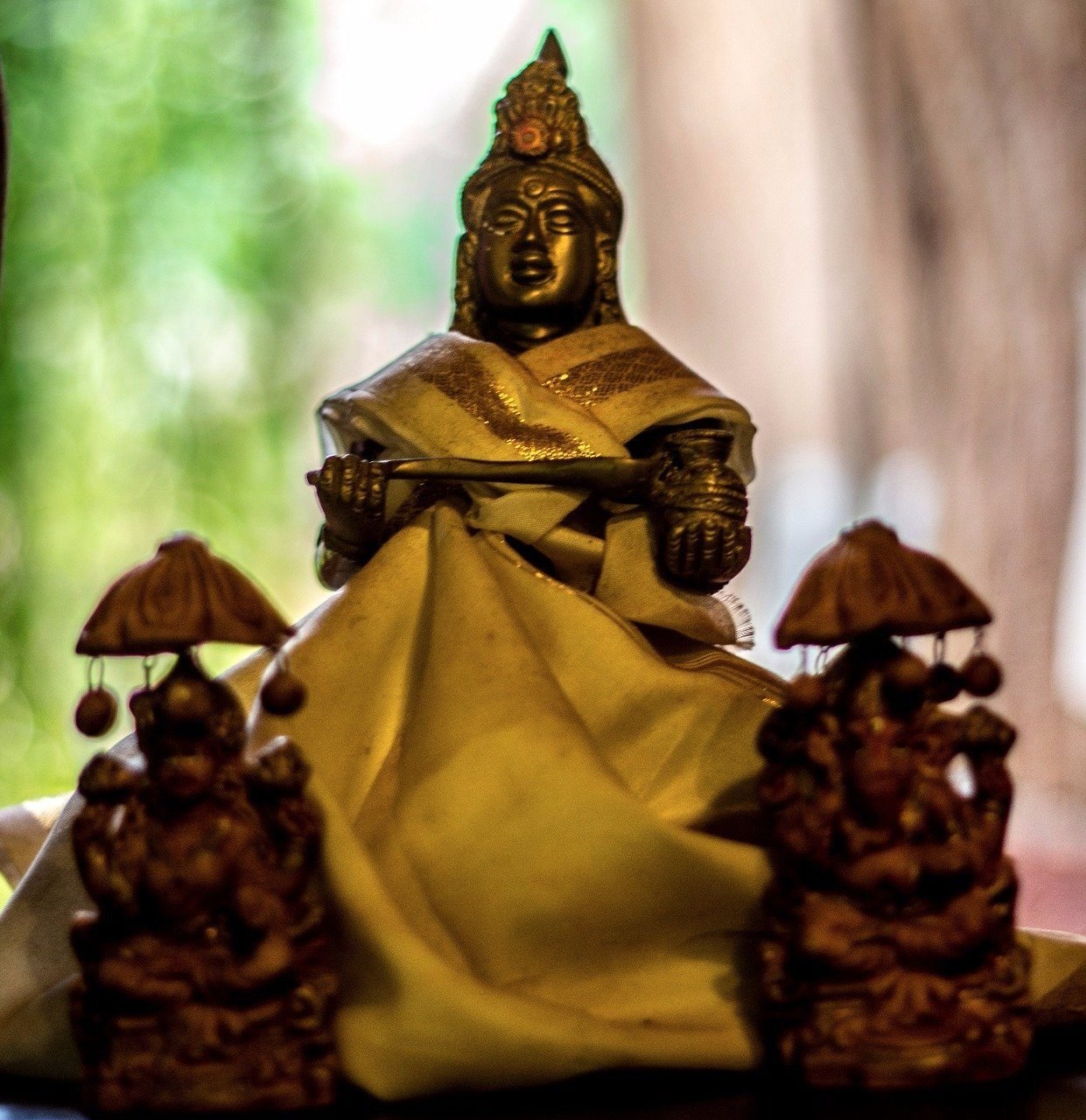
Food occupies a very special place in the Indian spiritual traditions. It is not regarded merely as something that satisfies hunger or gives pleasure to the senses. Annam…
Read article Philosophy
Yoga, to me, is both quite simple and wonderfully elaborate. It can satisfy our never ending quest for an understanding of health, happiness and existence itself.
Read article Philosophy
Giving is very powerful. Give whatever you can, but you have to give. This is a universal principle, and whenever we interrupt that natural movement, there are consequences…
Read articleEverything written here is taught in person, in sequence, at the ashram in Assagao.