
The Power of Giving
Giving is very powerful. Give whatever you can, but you have to give. This is a universal principle, and whenever we interrupt that natural movement, there are consequences…
Read article
Yoga, to me, is both quite simple and wonderfully elaborate. It can satisfy our never ending quest for an understanding of health, happiness and existence itself.
Yoga is not only a collection of physical practices. It is a complete wisdom tradition, with practical tools to help us deal with the situations of everyday life and to live in greater harmony with ourselves, with others and with Mother Nature.
What is required is perhaps much simpler than we imagine. A little asana, a little pranayama, a proper and sensible diet, relaxation, meditation and some Satsang every day can already make a considerable difference to the way we live.
From time to time, we can also include internal cleansing practices and yogic kriyas, traditionally known as the Shat Karmas, according to our needs and under proper guidance.
And then there is love, bhakti and positive thinking.
Love towards ourselves and towards others. Bhakti towards whatever work or responsibility has been given to us. A positive attitude that allows us to see possibility even when circumstances are difficult.
And the wonderful thing is that we do not need to spend money to love, to have devotion or to develop a positive attitude. These are free, and perhaps some of the most useful tools we have for creating a more peaceful life.
We must continue doing what we do, but with awareness. That is where Yoga begins to become part of everyday life.
If you are a learner or student, do justice to your talent and to the subject you are studying. If you are working, work with dedication and sincerity, so that your efforts benefit not only your company but also the people and organisation connected with it.
If you love someone, love with trust, honesty and understanding. If someone has done something good for you, do not forget it. Be grateful for the kindness that has been shown to you and be ready to support and help that person when the opportunity arises.
These are ordinary things, but doing ordinary things with awareness changes their quality. This is Yoga in practical life.
We must also be honest with ourselves. We are perhaps the closest person to ourselves, and we know our weaknesses as well as our strengths. There is little value in pretending otherwise.
Our goals should therefore be realistic and practical, based on our strengths and our priorities. Once a goal is chosen, we should follow the path towards it with sincerity, dedication and devotion.
Yoga does not ask us to escape from life. It asks us to become more conscious of the way we live it.
One important aspect of Yoga life is Satsang, or spiritual company.
The people we spend time with influence us, often more than we realise. Our friends, colleagues and the wider environment around us can affect our thinking, habits, attitudes and even our understanding of what is possible.
Being around people who have a genuine interest in Yoga, who have knowledge and who carry a positive and constructive attitude can have a profound influence on our lives.
We should therefore make an effort to seek such company and to visit places where Yoga is practised and studied in a meaningful way.
Sometimes a change of environment is good for us. Take a vacation. Visit a place where Yoga is part of everyday life. Spend a week or two, or longer if time permits. Learn, laugh and live.
A Yoga retreat can be more than a holiday. It can give us the opportunity to step away from our usual routines, spend time with people who share similar interests and look at our own life from a little distance.
Sometimes that distance is enough to see things differently.
One of the important aspects of a Yoga life is Karma Yoga.
Karma Yoga is often described in Yoga texts, schools and by different teachers as selfless service. For someone living an ordinary working life, however, this idea can sometimes sound difficult or even impractical.
So let us simplify it.
If we are students, we can live a disciplined life, follow a reasonable routine, study sincerely and do our best without constantly looking for shortcuts.
If we are working, we can work with dedication. We can refuse to give or accept bribes. We can complete our work within the agreed or estimated time whenever possible. We can remember that other people may depend upon our work and that our sincere and timely efforts may make their lives easier.
This too is Karma Yoga in practical life.
Karma Yoga does not necessarily require us to leave our jobs, move to an ashram or spend our days doing extraordinary things.
It can begin exactly where we are.
The quality of our action matters. The attitude with which we perform it matters. And the awareness that our actions affect other people matters.
In practical terms, a Yoga life is about learning to live each day and to live in the moment.
The past has already happened. We can learn from it, but we cannot change it.
The future has not yet arrived. We can prepare for it, but we cannot completely control it.
What we actually have is the present moment and the action that is possible within it.
So let us do the work that is in front of us with honesty and sincerity. Let us put our attention into what we can actually influence rather than spending all our energy regretting what has already happened or worrying about what might happen tomorrow.
This does not mean that we should stop planning for the future or learning from the past. It simply means that neither should prevent us from living the life that is happening now.
A positive thought, a smile, a sense of humour and a little goodwill can sometimes take us much further than we imagine.
Yoga is sometimes presented as something we do for an hour on a mat.
We practise our asana, finish our pranayama, perhaps meditate for a while, and then return to the rest of our life.
But the deeper understanding of Yoga is much broader.
The real question is what happens when we get off the mat.
How do we speak to people? How do we work? How do we deal with disappointment? How do we respond when someone disagrees with us? How do we use what we have learned? How do we treat ourselves, other people and the natural world?
This is where Yoga becomes a way of living.
The practices of Hatha Yoga, pranayama, meditation, Yoga Nidra, yogic kriyas and contemplation can help prepare and refine us, but their value is ultimately reflected in how we live.
At SWAN, this is an important part of our understanding of traditional Yoga. Asana is not separate from pranayama, meditation, philosophy, service or everyday life. These are different aspects of a larger tradition that asks us not only to practise Yoga, but gradually to understand what it means to live with greater awareness.
Yoga should be able to accompany us into the kitchen, the workplace, our relationships and our ordinary responsibilities.
There is no special place where Yoga has to begin.
It can begin exactly where we are.
Perhaps we do not need to make our lives unnecessarily complicated.
Practise a little asana. Breathe consciously. Eat sensibly. Rest properly. Spend some time in meditation. Keep good company. Serve when you can. Do your work sincerely. Be grateful. Laugh more often. Spend time in nature. And when life becomes difficult, remember to pause and become aware before reacting.
These simple things, practised consistently, can gradually change the way we experience our lives.
Yoga is not about becoming someone else.
It is about becoming more aware of the person we already are, understanding our strengths and weaknesses, and learning to live with greater clarity, balance and harmony.
I sincerely wish that we all become healthy, wise, happy and at peace, with plenty of humour, joy and Yoga in our lives.
Article by Shivendra.
Copyright SWAN Yoga Retreat, Assagao, Goa, India.
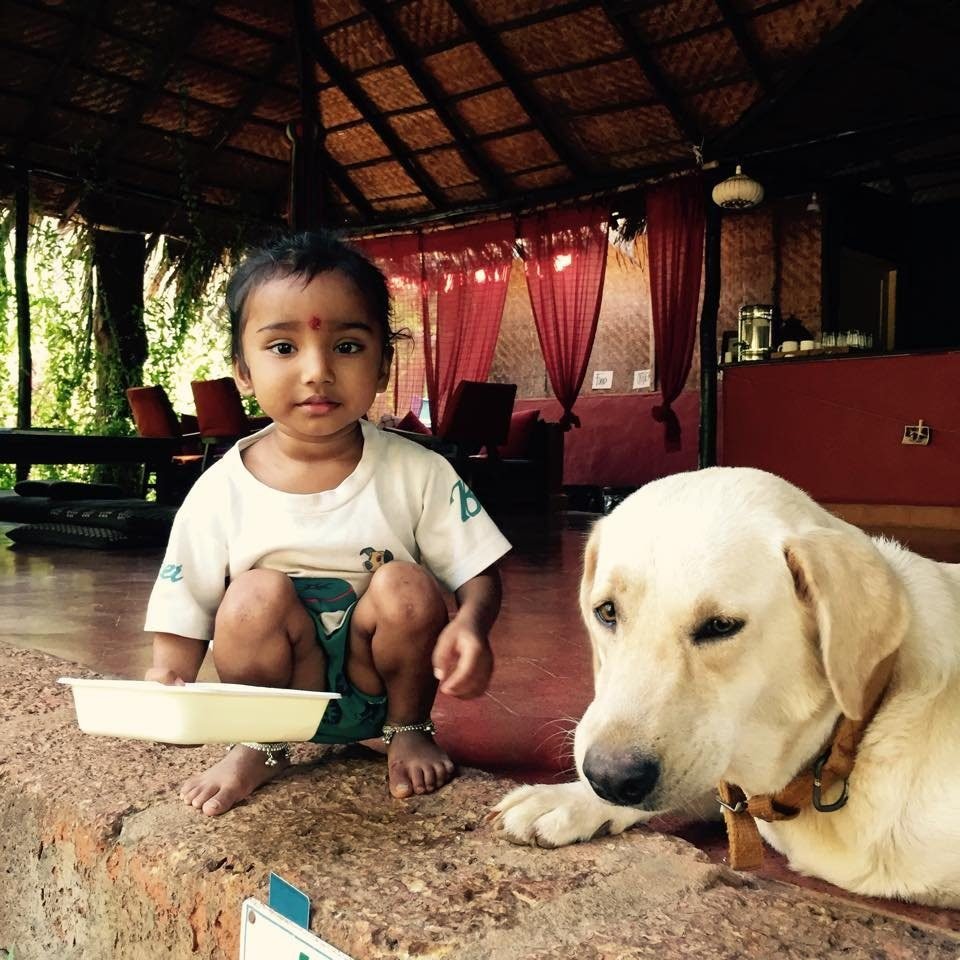 Philosophy
Giving is very powerful. Give whatever you can, but you have to give. This is a universal principle, and whenever we interrupt that natural movement, there are consequences…
Read article Philosophy
Predictive Indian Astrology, commonly known as Vedic Astrology or Jyotisha, is a traditional Indian system of studying the relationship between celestial movements and human…
Read article Philosophy
Each and every person on this planet was having a unique experience during the social distancing and restrictions imposed to slow the transmission of COVID 19. Human beings…
Read articleEverything written here is taught in person, in sequence, at the ashram in Assagao.