
Yoga and Life
Yoga, to me, is both quite simple and wonderfully elaborate. It can satisfy our never ending quest for an understanding of health, happiness and existence itself.
Read article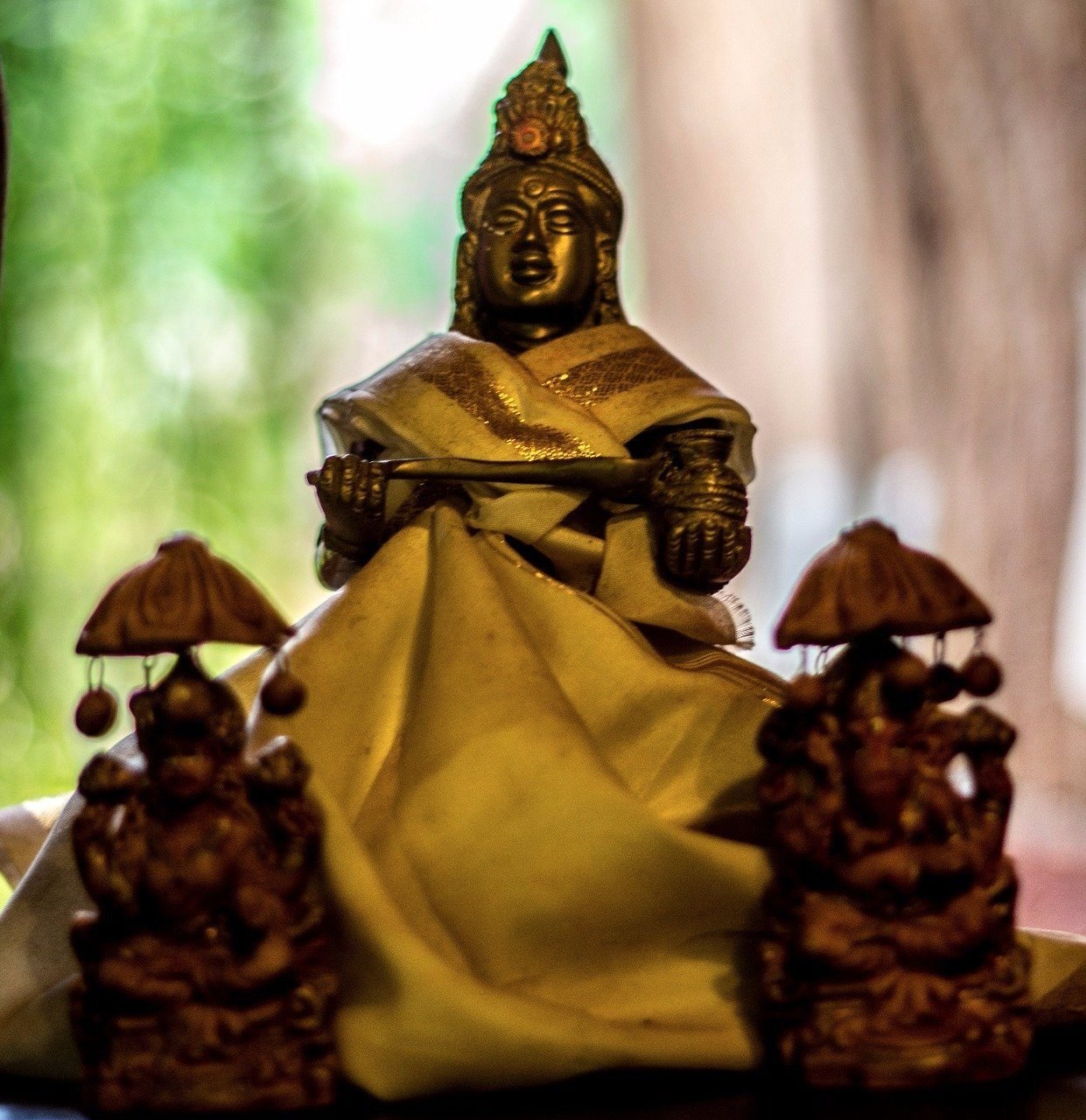
Food, Nourishment and the Yogic Understanding of Life
Food occupies a very special place in the Indian spiritual traditions. It is not regarded merely as something that satisfies hunger or gives pleasure to the senses. Annam, the Sanskrit word for food, is understood as nourishment and as one of the fundamental supports of life.
In the Yogic and Hindu traditions, food is therefore treated with respect. Before eating, prayers or offerings are traditionally made in gratitude for the nourishment that has been provided. Food comes from the earth, through the hands of many people, and ultimately sustains the body that allows us to live, work, practise and pursue our spiritual aspirations.
This understanding of food is beautifully represented by Annapurna Devi, the Divine Mother in her aspect as the giver of food and nourishment.
Annapurna is a form of Parvati, the consort of Shiva. Her name is formed from Anna, meaning food or nourishment, and Purna, meaning full, complete or abundant.
She represents the abundance of nourishment that sustains life.
The importance of food is also reflected in the Indian tradition of Annadana, the offering or donation of food. Giving food is considered one of the most valuable forms of giving because it directly supports life.
Food is not simply something we possess. It is something that can be shared.
The Annapurna tradition reminds us of this simple truth: before we ask what food can give us, we can also remember the many things that make food possible.
The earth, water, sunlight, farmers, cooks and countless unseen hands all participate in bringing a meal to us.
The Sri Annapurna Ashtakam is traditionally recited as a prayer to Annapurna Devi. It expresses the aspiration not only for physical nourishment, but also for spiritual knowledge, wisdom and freedom from unnecessary attachment.
One of the well known verses is:
Om Annapurne sadaa purne,
Sankara praana vallabhe,
Gyaan vairagya sidhyartham,
Bhikshaam dehi cha Parvati.
Maataa cha Parvati Devi,
Pitaa devo Maheshwarah,
Baandhavaah Shiva bhaktaash cha,
Swadesho Bhuvana Trayam.
The prayer can be understood as:
O Annapurna, who are ever complete and beloved of Lord Shiva, grant me the alms of your grace so that I may attain spiritual knowledge, freedom from worldly attachment and fulfil the higher purpose of life.
Mother is Parvati, father is Lord Maheshwara. The devotees of Shiva are my relatives, and the three worlds are my homeland.
There is a beautiful movement within this prayer. We ask for food, but we also ask for knowledge. We ask to be nourished, but we also ask for the wisdom to understand what nourishment is ultimately for.
The Yogic understanding of food goes deeper than the question of what is healthy or unhealthy.
According to the Taittiriya Upanishad, the physical body is described as the Annamaya Kosha, the sheath composed of food. The body is formed and sustained through nourishment.
Food therefore becomes part of us.
What we eat affects the physical body, but the traditional understanding also recognises a relationship between food, prana and the mind. This is why the quality, preparation and manner of eating have traditionally been given importance in Yoga and Ayurveda.
The Bhagavad Gita also discusses food in relation to the three Gunas, describing foods according to their influence on the qualities of Sattva, Rajas and Tamas.
This does not mean that Yoga requires us to become obsessed with food.
Quite the opposite.
The purpose is to develop awareness.
What do we eat? How do we eat? How much do we eat? How does food affect the body and mind? Do we eat because we are genuinely hungry, or because we are bored, emotional or simply accustomed to eating at a particular time?
These questions can themselves become part of our practice.
The relationship between food and the body is especially interesting when viewed through the concept of the Pancha Koshas, the five sheaths described in the Taittiriya Upanishad.
The first is Annamaya Kosha, the physical body sustained by food. Beyond it are Pranamaya, Manomaya, Vijnanamaya and Anandamaya Kosha.
The teaching does not suggest that food alone leads to spiritual realisation. Rather, it reminds us that the physical body is the foundation through which our journey takes place.
A body that is properly nourished can support practice.
Pranayama requires a functioning body. Meditation requires the ability to sit steadily. Hatha Yoga works through the physical body. Even the most subtle spiritual enquiry takes place through a human life that needs food, rest and care.
Food therefore deserves respect, without becoming an obsession.
In the traditional Indian way of life, food is often prepared and offered before it is consumed.
This changes the attitude towards eating.
Instead of seeing the meal simply as something that belongs to us, it becomes something received and something for which we can be grateful.
At SWAN, an offering is made to Mother Annapurna with the understanding that the nourishing energy contained in the food may sustain all who partake of it.
This is more than a ritual.
It is a reminder.
The food on our plate has not appeared by itself. It has come from nature and from the work of many people. To pause before eating and acknowledge this can transform even an ordinary meal into a moment of awareness.
At SWAN, food is an important part of the residential experience.
We believe that a Yoga retreat should offer more than Yoga practice alone. Food, rest, routine, nature and company all contribute to the experience of living a more conscious life.
Our meals are primarily vegetarian and draw from the many culinary traditions of India. Different regions of the country have their own ingredients, spices, cooking methods and combinations, and we enjoy bringing some of this variety to the table.
Goan flavours also find their place in our menus, reflecting the region in which we live.
The weekly menus offer variety so that meals remain interesting while still being suitable for a residential Yoga environment. We also make reasonable efforts to accommodate food allergies, intolerances and dietary preferences, and encourage guests to speak openly with us about their needs.
Food at SWAN is not limited to sitting down and eating it.
Guests have often enjoyed being involved in the kitchen and seeing how the meals they eat are prepared.
This interest eventually led to our Ayurvedic and Indian vegetarian cooking classes, where participants can learn about ingredients, spices, preparation and traditional Indian cooking.
There is something particularly satisfying about learning to cook the food that you have just enjoyed eating.
It also changes the way we relate to food. We begin to understand that cooking is not simply a technical process. It involves attention, patience, balance and an understanding of how different ingredients work together.
In this sense, cooking itself can become a practice of awareness.
The familiar saying, “You are what you eat,” contains a simple truth, although the Yogic understanding is somewhat deeper.
Food becomes the physical body. The condition of the body influences our energy and our capacity for practice, while our physical state can also influence the mind.
This is one reason why Yoga and Ayurveda have traditionally paid such attention to food.
The intention is not to create rigid rules around eating, but to develop a more conscious relationship with nourishment.
Food should nourish the body, support the mind and allow us to live and practise with greater ease.
Perhaps the most important shift is to stop seeing food only as something that satisfies hunger or the senses.
The body is an instrument through which we experience this life.
We use it to walk, work, love, learn, serve, practise Yoga, meditate and explore the deeper questions of existence. Food sustains that instrument.
When we look at food in this way, eating becomes an act of responsibility and gratitude.
We eat not simply to satisfy ourselves, but to sustain the body so that it can fulfil its purpose.
And perhaps this is the deeper teaching of Annapurna Devi.
She gives us food, but the prayer reminds us to ask for something more: knowledge, wisdom and freedom from unnecessary attachment.
The meal nourishes the body.
Awareness transforms the meal into something more.
Article by Gyanmitra Saraswati.
Copyright SWAN Yoga Retreat, Assagao, Goa, India.
 Philosophy
Yoga, to me, is both quite simple and wonderfully elaborate. It can satisfy our never ending quest for an understanding of health, happiness and existence itself.
Read article Philosophy
Giving is very powerful. Give whatever you can, but you have to give. This is a universal principle, and whenever we interrupt that natural movement, there are consequences…
Read article Philosophy
Predictive Indian Astrology, commonly known as Vedic Astrology or Jyotisha, is a traditional Indian system of studying the relationship between celestial movements and human…
Read articleEverything written here is taught in person, in sequence, at the ashram in Assagao.