
Traditional Yoga Nidra as it is.
Yoga Nidra is a traditional practice with its roots in the Tantras, and is closely associated with Pratyahara, the withdrawal of the senses, the fifth limb of Patanjali’s Ashtanga Yoga. The modern systematic form taught through the Satyananda Yoga tradition was developed and presented by Swami Satyananda Saraswati, who drew together traditional teachings and structured them into a method that could be practised and taught systematically.
At SWAN, Yoga Nidra is taught within this living tradition, with teachers trained in the Bihar School of Yoga and the Satyananda Yoga lineage. The emphasis is not simply on guided relaxation, but on understanding the structure, purpose and progressive stages of the practice.
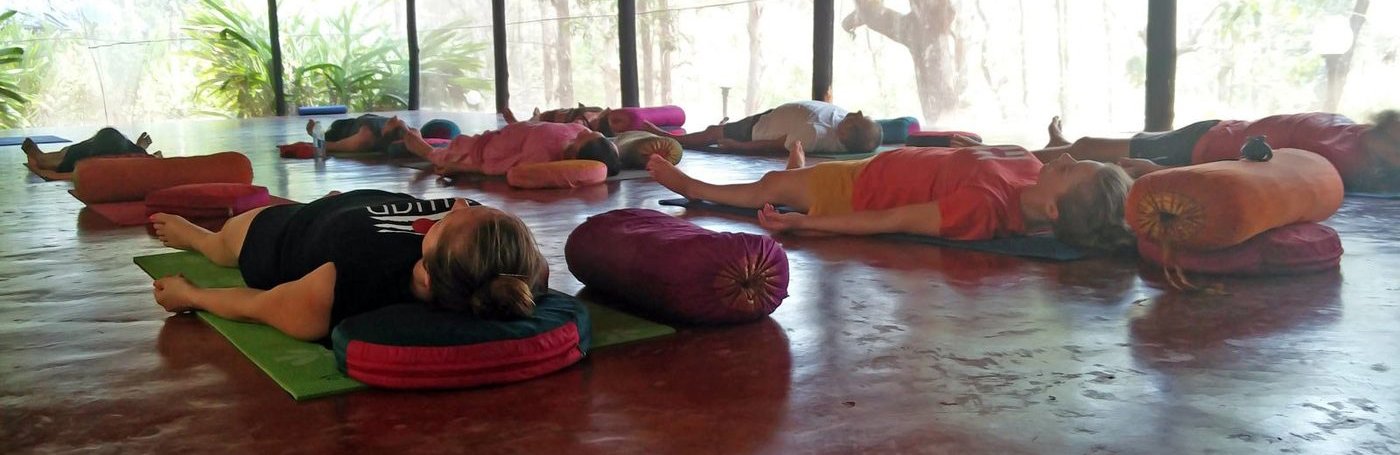
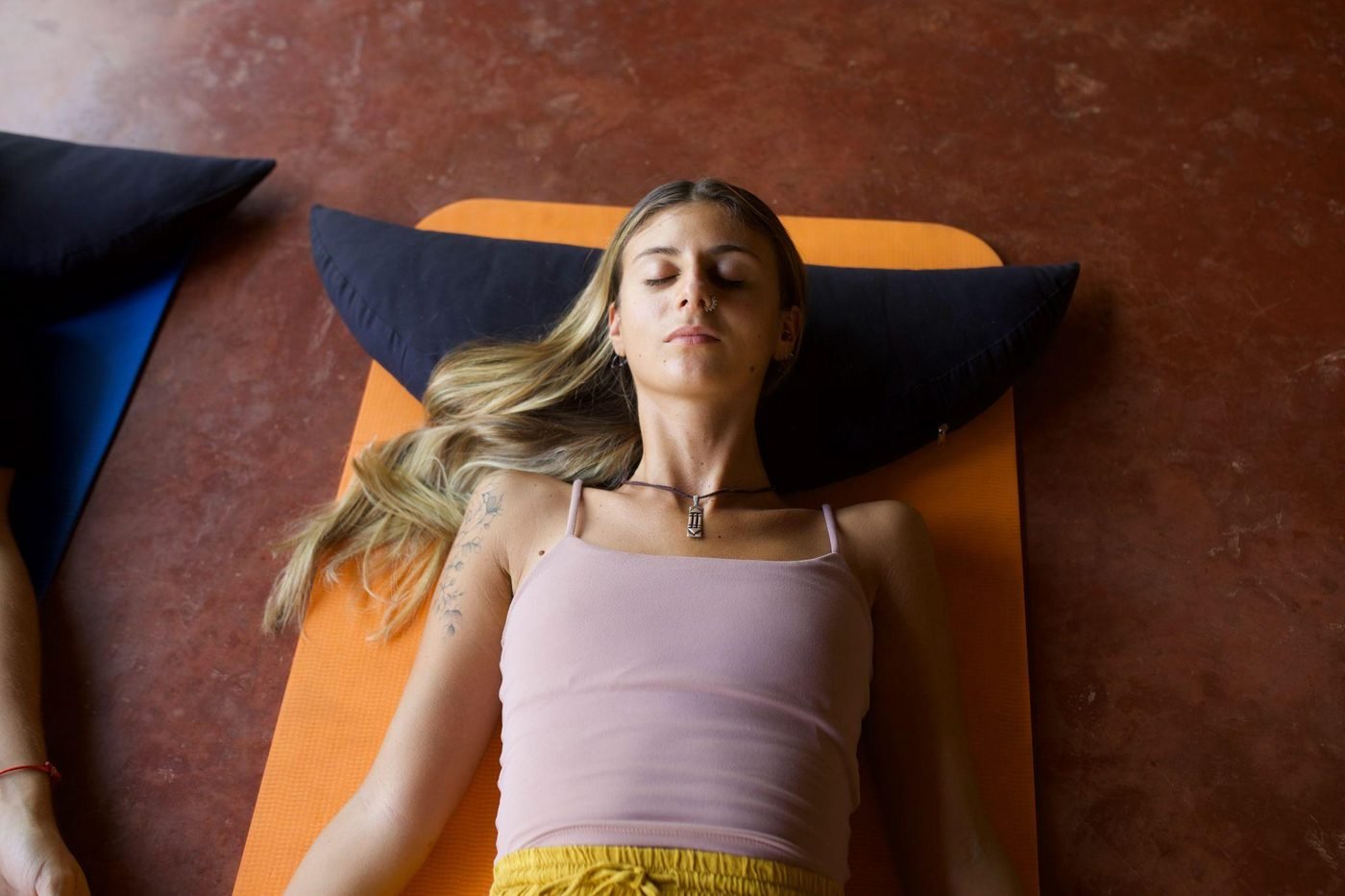
During Yoga Nidra, awareness is gradually directed away from the constant stimulation of the senses and brought into a state of deep physical, mental and emotional relaxation while maintaining awareness. The systematic rotation of awareness through the body, breath awareness, opposite sensations and visualisation are used to develop progressively deeper states of relaxation and inner awareness.
The deeper purpose of Yoga Nidra within the Satyananda Yoga method goes beyond relaxation. The practice provides a systematic way of exploring the relationship between body, breath, senses, mind and awareness. Sankalpa, the resolve cultivated during the practice, is introduced within this framework as a means of giving conscious direction to one’s practice and life.
What you will study
- The origins of Yoga Nidra in the Tantras, and its place within Patanjali’s eight limbs
- Pratyahara, the withdrawal of the senses, in theory and in practice
- The systematic rotation of awareness through the body
- Breath awareness and the use of opposite sensations
- Visualisation and the role of imagery
- Sankalpa, how a resolve is formed, planted and maintained
- The Satyananda Yoga method as developed and taught by Swami Satyananda Saraswati
- The traditional structure and stages of a complete Yoga Nidra practice
- How to hold the space and confidently guide a Yoga Nidra practice for others
- Yoga Nidra during pregnancy and for particular needs
- Supporting practices including asana, pranayama and meditation

What you will be able to do
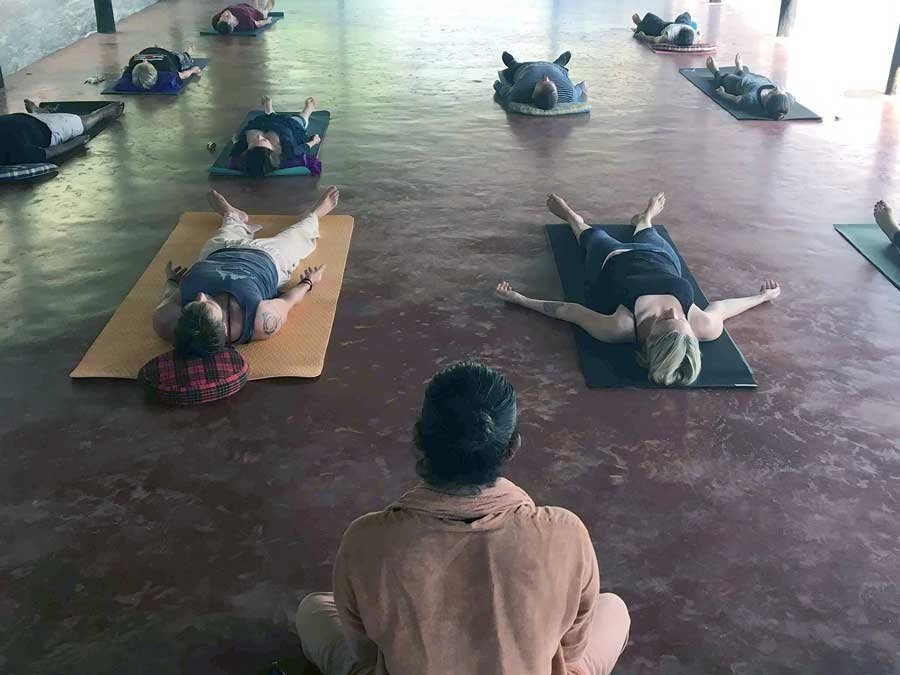
This training is designed to give you something practical that you can carry beyond SWAN: the ability to establish, understand and sustain your own Yoga Nidra practice. Rather than simply learning about Yoga Nidra, you will spend the training practising the traditional Satyananda method under guidance, experiencing how different techniques affect the body, senses, mind and awareness, and learning how they can be brought together into a coherent practice.
By the end of the training, you will be able to establish and maintain a personal Yoga Nidra practice based on the traditional Satyananda Yoga method. You will have practical experience with Pratyahara, rotation of awareness, breath awareness, opposite sensations, visualisation and Sankalpa, and understand how these elements fit together within a complete Yoga Nidra practice.
You will learn how to structure and conduct a Yoga Nidra session for others, understanding the purpose behind each stage rather than simply memorising a script. You will also gain a clearer understanding of how Yoga Nidra can be appropriately adapted for different participants and circumstances.
For Yoga teachers, meditation teachers and serious practitioners, this provides an opportunity to add a substantial traditional practice to an existing body of knowledge. The training is particularly valuable for those who wish to understand Yoga Nidra not merely as a relaxation technique, but as a systematic practice of Pratyahara and inner awareness rooted in the Yoga and Tantra traditions.
Dates
This training runs once a season. Write to us for the current dates and we will confirm availability.
Course fee
Per person, including your cottage, all meals and the whole course.
Budget Cottage
Row rooms with private bathroom.
Standard Cottage
Private cottage with private bathroom and sit-out area.
Deluxe Cottage
Best-view cottage with private bathroom and sit-out area.
A 30% non-refundable deposit reserves your place; the balance is payable on arrival at SWAN. You are welcome to pay in full in advance if you prefer, but it is not required.
What is included
Included
- Cottage accommodation for the full course
- All meals, sattvic Ayurvedic vegetarian, fruit and herbal teas
- Every class, lecture and practical session
- Course materials
- Havan and kirtan on Saturday and Sunday evenings, and satsang
- Certificate on completion
Not included
- Flights, visa and travel insurance
- Airport transfers (approx. ₹2,200 each way, air-conditioned)
- Ayurvedic treatments and medicines
- Juice bar and SWAN boutique purchases
- Personal expenses and excursions

Yoga Nidra and modern research
Modern research has investigated Yoga Nidra and related practices, with studies reporting potential benefits for relaxation, perceived stress, sleep, anxiety and aspects of psychological wellbeing. The scientific literature is still developing, and research findings should be understood alongside the traditional framework.
Yoga Nidra has also been studied in relation to stress, anxiety, depression, burnout, sleep difficulties and hypertension, with research indicating possible benefits for relaxation, perceived stress, sleep quality and aspects of psychological wellbeing.
As a traditional practice of deep relaxation and Pratyahara, Yoga Nidra may provide supportive benefits for people experiencing everyday stress, mental fatigue, emotional strain, sleep difficulties and the effects of prolonged stress. It may also complement broader approaches to wellbeing for people managing stress related physical or psychological concerns.
Yoga Nidra, wellbeing and professional care
Yoga Nidra is not a substitute for medical diagnosis, psychological care, prescribed medication or other professional treatment. Participants with a diagnosed medical or psychological condition should continue their existing professional care and discuss any significant changes to their practice with their doctor or qualified healthcare professional.
Participants should seek appropriate medical or psychological care if they are experiencing persistent or worsening depression or anxiety, thoughts of self harm or suicide, unexplained or severe physical symptoms, consistently elevated blood pressure, significant sleep problems, or symptoms that interfere substantially with normal daily functioning. Yoga Nidra should be regarded as a complementary practice and not used to delay professional assessment or treatment.
The emphasis of the training remains on learning Yoga Nidra as a traditional Yogic practice of relaxation, Pratyahara and inner awareness, rather than presenting it as a medical intervention.
Offered once a season
This is a deliberately focused and intimate training, offered only once during the season. It provides a rare opportunity to study the Satyananda Yoga method in a residential setting, with teachers who have themselves been trained within the lineage and who can transmit the practice through direct instruction and experience. Write to us for the current dates.
Frequently asked questions
No previous qualification is required. What matters is a genuine interest and a willingness to keep the ashram discipline, a full day, early starts and silence at night.
Your cottage, all meals, every session on the syllabus, course materials and your certificate. Ayurvedic treatments, transfers and personal purchases are extra.
A 30% non-refundable deposit reserves your place; the balance is payable on arrival at SWAN. You are welcome to pay in full in advance if you prefer, but it is not required. Send us an enquiry with your chosen dates and cottage type and we will confirm availability and send payment details.
Loose, modest clothing you can practise in, a shawl for early mornings and evening havan, sandals, a torch, insect repellent and sunscreen. Mats and props are provided.
Often, yes, many people add a few days of retreat or a short course of Ayurvedic treatments either side of a course. Tell us when you enquire and we will check availability.
What people say.
Video reviews from our YouTube channel and Instagram.
Reserve your place.
Tell us which dates you are looking at and which cottage you would prefer. We will confirm availability and answer anything still open.