
Which Yoga Is Good for Me?
There is no shortage of Yoga available today. Walk into almost any major city and you will find studios offering different styles, traditions and approaches to practice. The…
Read article
Karma Yoga is often described as the Yoga of action, but simply being active does not make an action Karma Yoga. Every human being is acting throughout the day. We work, cook, clean, earn money, care for our families, communicate with other people and deal with countless responsibilities. The difference lies in the attitude with which we perform these actions and in our relationship with their results.
The ultimate purpose of Yoga is freedom from the patterns that disturb our inner balance, and Karma Yoga approaches this through action. It teaches us how to participate fully in life without becoming unnecessarily entangled in the results of what we do. This is why Karma Yoga remains as relevant in modern life as it was when the teachings were given in the Bhagavad Gita. We do not need to withdraw from society or spend our lives in an Ashram to practise it. Our ordinary responsibilities can themselves become the field of practice.
The Bhagavad Gita presents Karma Yoga through the dialogue between Krishna and Arjuna. Arjuna is faced with a difficult responsibility and is overwhelmed by the consequences of the action before him. Krishna does not tell him simply to walk away from life. Instead, he teaches him how to act without being enslaved by attachment to the fruits of action. This distinction is central to understanding Karma Yoga.
The Sanskrit word Karma means action or deed. In the wider philosophy of Yoga, karma also refers to the consequences and impressions associated with our actions. Every action has consequences, and our attachment to those consequences can create further psychological patterns. We act because we want something, become attached to the result, experience satisfaction when we receive what we wanted and frustration when we do not. The mind then begins the same process again.
Karma Yoga introduces a different relationship with action. We still act, and we still care about doing something properly, but we learn to reduce our dependence upon the outcome for our sense of fulfilment. We perform the action because it is appropriate, necessary or part of our responsibility, rather than because we are constantly calculating what we will receive in return.
This should not be confused with indifference. Karma Yoga does not mean that we should perform our responsibilities carelessly or stop caring about the consequences of our actions. Quite the opposite. The teaching asks us to bring greater awareness and sincerity into what we do while learning to release excessive attachment to the result.
The famous teaching of the Bhagavad Gita concerning action and its fruits points towards this principle. Our responsibility is to act, but the fruits of action are never entirely within our control. Circumstances, other people and countless factors beyond our individual intentions influence the outcome.
When we understand this, action can become a means of freedom rather than another source of bondage.
Two people can perform exactly the same task while having completely different inner experiences. One person may work with resentment, constantly thinking about how much effort is being demanded from them and wondering whether anyone will appreciate it. Another may perform the same task with attention and responsibility without making recognition the condition for doing it well.
From the outside, their actions may appear identical. Internally, however, something very different is taking place.
This is why Karma Yoga cannot simply be defined as service to other people. Service can certainly be an expression of Karma Yoga, but even service can become mixed with ego and expectation. We may help someone and secretly expect gratitude. We may make sacrifices and then feel disappointed when nobody notices. We may give generously but still want to be recognised as a generous person.
Karma Yoga asks us to become aware of these tendencies rather than pretending that they do not exist.
The practice is therefore much more subtle than simply doing more good deeds. It is about examining our relationship with action itself. When we can perform an action sincerely without constantly asking what we will gain from it, action begins to lose some of its binding power.
A few moments of stillness in the morning can make a significant difference to the way we approach the rest of the day. Before becoming absorbed in messages, responsibilities and the endless stream of information that modern life brings into our minds, we can sit quietly and become aware of the breath and the state of the mind.
Meditation is not necessarily about making the mind completely silent. In the beginning, it may simply help us recognise how much activity is already taking place within us. When we become familiar with our own mental patterns, we are less likely to be controlled by them without noticing.
This awareness is extremely useful for Karma Yoga. During meditation we observe the mind in relative stillness; during daily activity we have the opportunity to observe the same mind in movement.
A regular practice of meditation, supported by traditional Hatha Yoga, Pranayama and other appropriate practices, can therefore provide a strong foundation for Karma Yoga. The purpose is not to create an artificial state of positivity before beginning the day. It is to develop enough awareness to recognise our reactions when the day inevitably becomes complicated.
The ego is not something that needs to be violently destroyed. In ordinary life, we need a functional sense of identity. The problem begins when our identity becomes completely dependent upon recognition, achievement, possession and control.
This can happen even within spiritual practice.
Someone may begin practising Karma Yoga because they genuinely want to help others, but gradually become attached to being seen as a person who helps others. The activity may remain the same while the motivation changes. Instead of freedom, another form of attachment has appeared.
This is why self observation is so important.
When we notice that we are waiting for appreciation, we can simply notice it. When we become irritated because somebody has not thanked us, we can observe the irritation. When we feel disappointed because our good intention was misunderstood, we can investigate the reaction rather than immediately acting from it.
This kind of awareness is itself part of Yoga.
The aim is not to become emotionless. It is to become less controlled by unconscious reactions.
Karma Yoga does not require us to search for extraordinary opportunities to serve. The most useful place to begin is usually with the responsibilities already present in our lives.
Cooking a meal, maintaining a home, caring for a family member, doing professional work or helping someone who needs assistance can all become opportunities for Karma Yoga. What changes is the quality of our participation.
Instead of rushing through an unpleasant task while mentally complaining about having to do it, we can give the activity our full attention. Instead of thinking constantly about what we will receive after completing it, we can learn to be present while doing it.
This does not mean that every task suddenly becomes enjoyable. Some work is tiring, repetitive or genuinely difficult. Karma Yoga does not require us to pretend otherwise. It asks us to notice the additional mental resistance that we create around the experience.
There is a considerable difference between saying, “This is difficult and I do not enjoy it,” and allowing the mind to build an entire story of resentment around that difficulty.
The first is an observation. The second can become bondage.
Karma Yoga is not something that needs to be practised dramatically. Trying to transform every aspect of our life overnight can easily create another form of tension. It is better to begin with small changes in awareness and allow them to become established through repetition.
A person may decide to practise Karma Yoga at work by performing responsibilities carefully without constantly seeking recognition. Another may bring the practice into family life by becoming more attentive while helping at home. Someone else may use Seva within a residential Yoga environment as an opportunity to examine their relationship with work, responsibility and appreciation.
The important thing is consistency.
Traditional Yoga places considerable importance on regular practice because repeated action gradually influences the mind. The same principle applies here. When awareness is brought into ordinary actions repeatedly, it becomes less dependent upon deliberate effort.
Eventually, we begin to notice our reactions more quickly. We catch ourselves becoming irritated before the irritation turns into an argument. We recognise the desire for praise before it becomes resentment. We notice when we are working only for a particular outcome and can reconsider our attitude.
This is how Karma Yoga gradually becomes part of daily life.
Modern life provides an enormous field for Karma Yoga because much of our day is spent working.
Whether our work is intellectual, physical, creative, administrative or practical, it can become an opportunity to examine attachment. Do we work only when we are being watched? Do we need constant approval? Does criticism completely disturb our balance? Do we become frustrated when someone else receives recognition? Can we complete something properly even when nobody will know who did it?
These questions are more important than trying to create a particular image of ourselves as a Karma Yogi.
There is also an important distinction between doing our best and becoming obsessed with perfection. Karma Yoga asks for sincere action, not compulsive achievement. We should perform our responsibilities as well as we reasonably can, but we must also understand that the final outcome is influenced by factors beyond our control.
This attitude can be particularly valuable for people who work in demanding environments. When every result becomes a measure of personal worth, action creates enormous psychological pressure. When we learn to separate sincere effort from complete control over the outcome, work can become more balanced.
Residential Yoga environments provide a particularly direct way of experiencing Karma Yoga because daily life itself requires participation. A Yoga retreat or traditional Yoga Ashram has many ordinary responsibilities that have nothing glamorous about them. Food has to be prepared, spaces have to be maintained, gardens have to be cared for and people have to help one another.
These activities may appear separate from Yoga practice, but they can become part of it.
This is particularly relevant for students undertaking a residential Yoga Teacher Training Course. A serious 200 Hour YTT or 300 Hour YTT should not be understood merely as learning a collection of asana sequences that can later be taught to students. Traditional Yoga education encompasses the wider discipline of living, including responsibility, awareness, self observation, relationship and service.
For this reason, Karma Yoga and Seva have an important place in many residential TTC and YTT environments. They remind students that Yoga is not simply something performed on a mat. It is also reflected in the way we participate in a community.
A residential Yoga Teacher Training in Goa, for example, can provide an opportunity to experience this directly. The tropical environment, the shared daily routine, the study of Yoga philosophy and the practical responsibilities of residential life can all become part of the educational experience.
One of the most valuable attitudes in Karma Yoga is the attitude of the witness.
While performing an action, begin to notice what is happening inside you. Perhaps there is impatience because the work is taking longer than expected. Perhaps there is irritation because someone else is not contributing. Perhaps there is pleasure because somebody has praised you. Perhaps there is disappointment because your effort has gone unnoticed.
Instead of immediately reacting, observe.
This does not mean becoming detached from life in the sense of becoming cold or indifferent. It means creating enough awareness to see the movement of the mind before automatically identifying with it.
This is closely related to the broader purpose of traditional Yoga. Through Hatha Yoga we become more aware of the body. Through Pranayama we become more aware of the breath and vital processes. Through meditation we become increasingly familiar with the movements of the mind. Through Karma Yoga we have the opportunity to bring that awareness into action.
Practice therefore moves beyond the formal session.
There is no reason why Karma Yoga should become another burden.
The original spirit of the practice is not to make us miserable in the name of spirituality. When attachment to the outcome begins to loosen, action can actually become lighter. We may discover that much of our exhaustion comes not from the action itself but from the constant psychological commentary surrounding it.
This does not mean that difficult work suddenly becomes pleasant. Nor does it mean that we should smile and pretend that everything is wonderful. Rather, it means learning to participate fully without continually fighting the reality of the moment.
When we give our attention completely to an action, something changes. We are no longer mentally living somewhere else while our body performs the task. We are actually present.
In this sense, Karma Yoga has a close relationship with meditation. Meditation develops the capacity to observe without immediately reacting, while Karma Yoga gives us the opportunity to apply that awareness while engaged in the movement of everyday life.
Spiritual practice is rarely developed in complete isolation. The people with whom we spend time influence our attitudes, habits and understanding, and a supportive Yoga community can be particularly valuable when we are trying to establish a new practice.
This does not mean that we have to withdraw from ordinary society. It simply means that spending time with people who are genuinely interested in Yoga, meditation and conscious living can reinforce our own intention.
A competent teacher can also help us recognise patterns that we may not be able to see ourselves. This is one reason the teacher student relationship has traditionally been important in many Yoga lineages.
For someone who wants to understand Karma Yoga more deeply, studying the Bhagavad Gita alongside a broader programme of traditional Yoga can be particularly valuable. A residential Yoga retreat, meditation programme or 200 Hour TTC in Goa can provide an environment in which philosophy is not treated merely as an intellectual subject but explored through daily practice.
Karma Yoga does not need to be added to our lives as another item on an already crowded schedule. Its real purpose is to transform the way we participate in the life we are already living.
We will continue to work, earn, cook, clean, communicate, care for people and deal with difficulties. The external circumstances may not change very much. What changes is our relationship with action.
We begin to recognise that we can make a sincere effort without demanding a particular result. We can help without keeping an account of what we are owed. We can accept appreciation without becoming dependent upon it. We can receive criticism without allowing it to completely define us. We can act responsibly while understanding that the final outcome is never entirely within our hands.
This is where Karma Yoga becomes a living practice rather than a philosophical idea.
The action itself may be completely ordinary. What makes it Yoga is the awareness with which it is performed.
A person does not have to leave home, become a monk or spend years in an Ashram to begin practising Karma Yoga. The opportunity is already present in the next action that needs to be performed.
When we learn to act with awareness, sincerity and less attachment to the fruits of our actions, ordinary life itself becomes part of the path of Yoga.
Article by SWAN Yoga.
Copyright SWAN Yoga Retreat, Assagao, Goa, India.
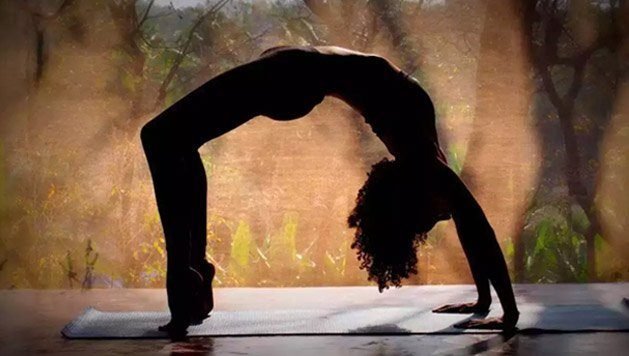 Practice
There is no shortage of Yoga available today. Walk into almost any major city and you will find studios offering different styles, traditions and approaches to practice. The…
Read article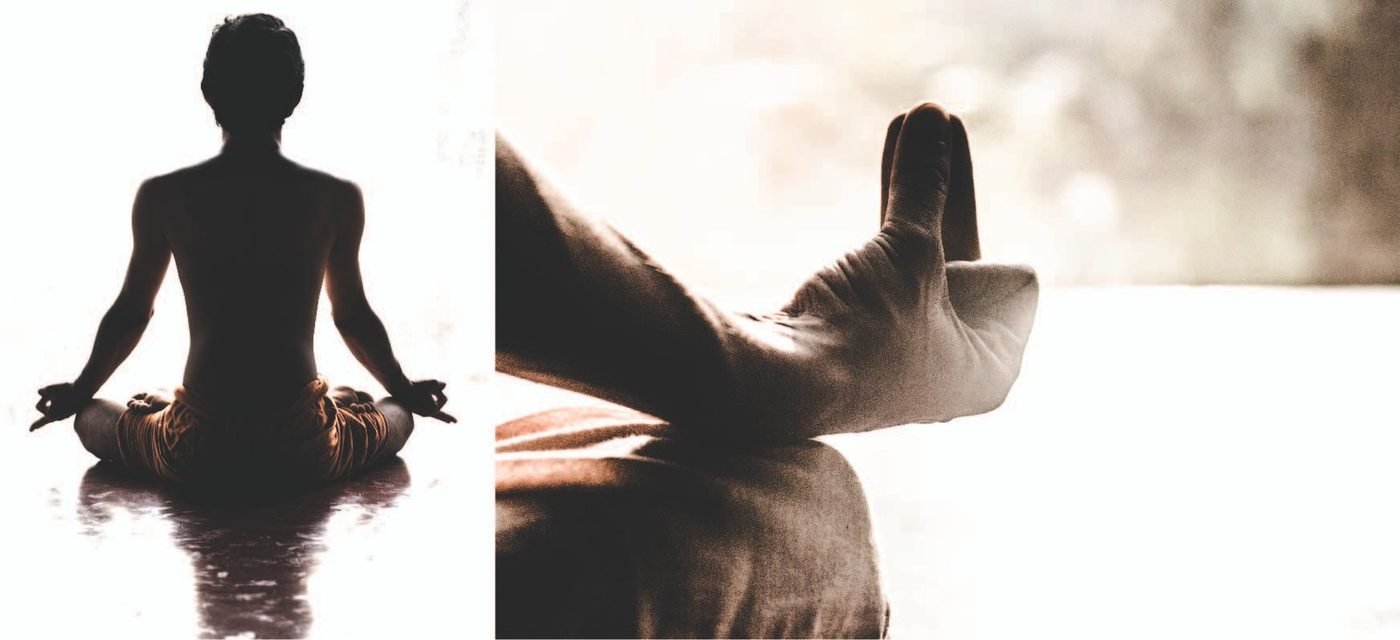 Practice
Chin Mudra is one of the best known hand gestures used in traditional Yoga and meditation. It is commonly practised during seated meditation and pranayama, and can be found…
Read article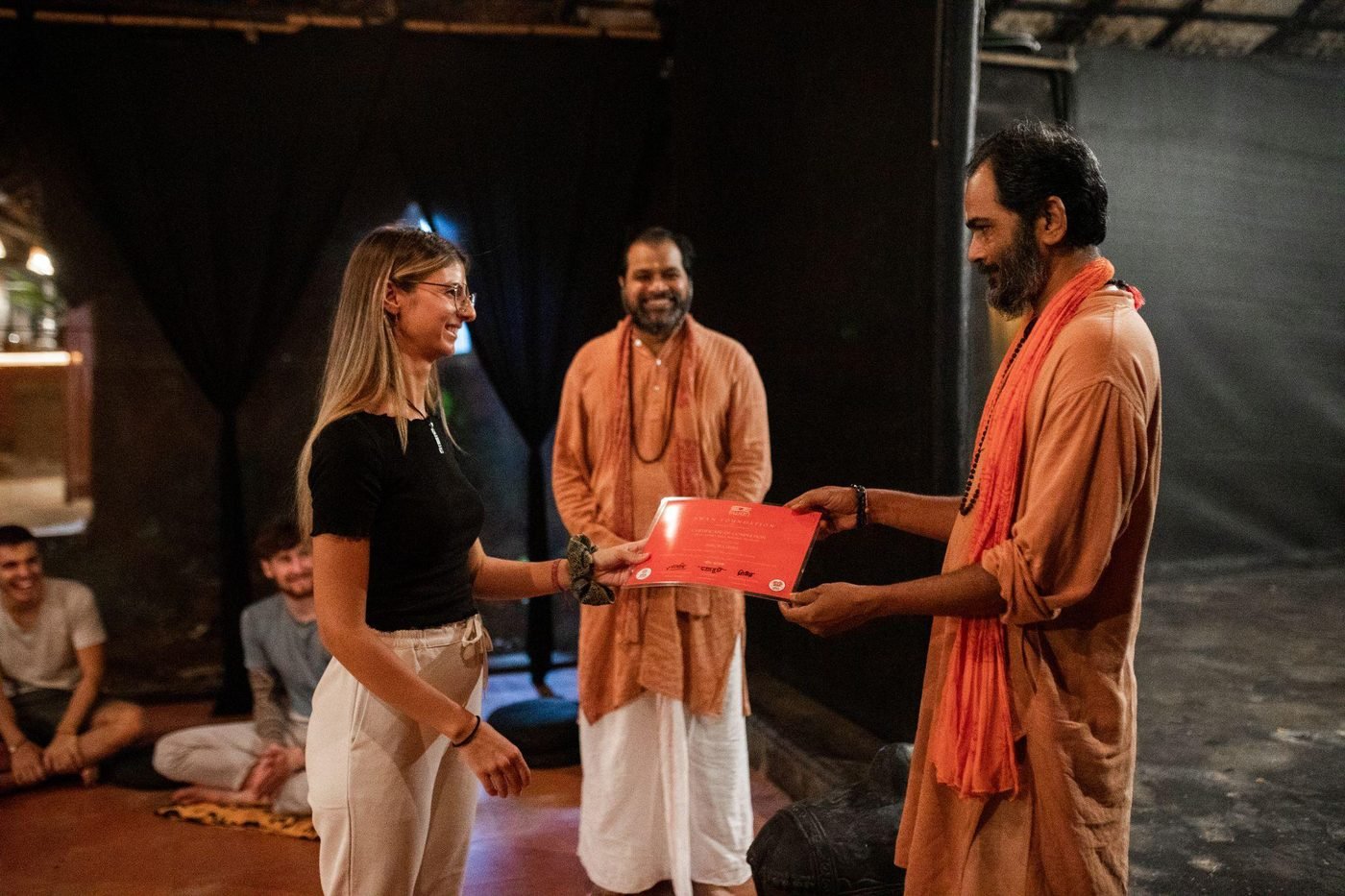 Practice
Becoming a Yoga teacher is much more than learning how to demonstrate asanas or completing a certificate. At its deepest level, it is an invitation to study Yoga, practise it…
Read articleEverything written here is taught in person, in sequence, at the ashram in Assagao.