
Embarking on the Journey to Become a Yoga Teacher
Becoming a Yoga teacher is much more than learning how to demonstrate asanas or completing a certificate. At its deepest level, it is an invitation to study Yoga, practise it…
Read article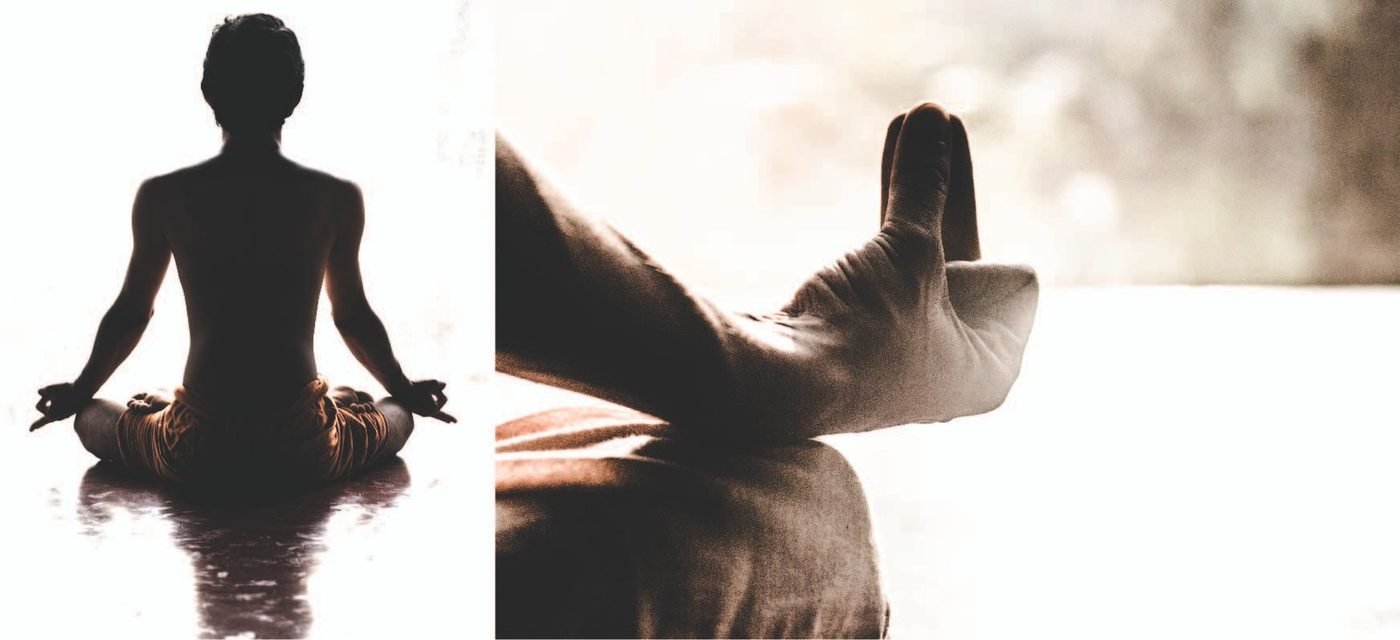
The Gesture of Consciousness
Chin Mudra is one of the best known hand gestures used in traditional Yoga and meditation. It is commonly practised during seated meditation and pranayama, and can be found throughout the traditions of Hatha Yoga.
The word Chin is derived from Chit, meaning consciousness. Chin Mudra can therefore be understood as the psychic gesture of consciousness.
In Yoga, mudras are traditionally understood as gestures or seals that influence the flow and direction of prana within the body. The fingers are considered to have subtle energetic relationships, and bringing them together is said to create a circuit that supports the inward movement of awareness.
Sit comfortably in a meditative posture with the spine upright and relaxed.
Bring the tip of the index finger gently towards the tip of the thumb, creating a soft circle. Keep the remaining three fingers extended without stiffness.
Place the hands on the knees or thighs with the palms facing downward.
Allow the shoulders, face and hands to relax. Chin Mudra can then be maintained while practising meditation, pranayama or simply sitting quietly with awareness of the breath.
There is no need to press the fingers together. The contact should be light and natural.
The three extended fingers are traditionally associated with the Three Gunas, the fundamental qualities through which nature, or Prakriti, expresses itself.
Middle finger: Sattva
Purity, clarity, harmony and understanding.
Ring finger: Rajas
Activity, movement, desire and passion.
Little finger: Tamas
Inertia, heaviness, darkness and resistance.
These three qualities are present in different proportions throughout nature and also influence our body, mind, emotions and behaviour.
The practice of Yoga is not simply to cultivate one quality and reject the others. The deeper aim is to develop awareness and ultimately go beyond identification with the Gunas.
The thumb is traditionally associated with universal consciousness, while the index finger represents the individual consciousness.
When the two are brought together, the circle formed by the fingers symbolises the relationship between the individual and the universal.
The index finger is sometimes understood as representing the individual self, or Jiva, while the thumb represents the supreme or universal consciousness.
The gesture therefore becomes a simple visual reminder of one of the central aspirations of Yoga: moving beyond limited identification with the individual self towards recognition of a deeper consciousness.
The three other fingers remain extended, representing the Gunas of Prakriti, while the thumb and index finger meet beyond them.
Chin Mudra is particularly suitable for meditation because the position of the hands can help establish a quiet, steady physical attitude.
In traditional Yoga, the body is prepared for meditation through practices such as asana and pranayama. Once the body becomes steady and the breath quieter, simple gestures such as Chin Mudra can accompany the inward movement of awareness.
At SWAN, Chin Mudra is often encountered in the context of traditional Hatha Yoga, meditation and pranayama rather than as an isolated hand exercise.
The mudra itself is simple. Its significance lies in the awareness with which it is practised.
Chin Mudra and Jnana Mudra are often confused because the position of the fingers is essentially the same.
The traditional distinction is primarily in the orientation of the palms.
In Chin Mudra, the palms generally face downward towards the knees or thighs, giving the gesture a more grounded quality.
In Jnana Mudra, the palms generally face upward.
Different Yoga traditions may describe these gestures somewhat differently, and the terminology is not always used consistently across texts and lineages.
What matters most in practice is not merely the position of the fingers, but the attitude and awareness brought to the practice.
Sit comfortably with the spine upright.
Close the eyes and allow the breath to settle.
Form Chin Mudra with both hands and rest them gently on the knees.
Become aware of the natural movement of the breath.
Do not try to control the breath. Simply observe it.
As the body becomes quiet, notice the relationship between the physical gesture, the breath and the mind.
Remain for a few minutes, allowing awareness to become progressively more inward.
When you are ready to finish, release the mudra gently and sit quietly for a few moments before opening the eyes.
A mudra can easily become another physical technique that we perform mechanically.
Traditional Yoga asks us to look deeper.
The fingers, the posture and the breath provide an external form. The real practice is the awareness brought to that form.
Chin Mudra reminds the practitioner of the relationship between individual consciousness and universal consciousness, while the three extended fingers remind us of the ever changing qualities of nature.
In this sense, a very small gesture can carry a considerable teaching.
The hand simply forms a circle.
The practice is to discover what that circle can point towards.
At SWAN, we approach such practices in much the same spirit. A traditional Yoga practice is not separated from the understanding behind it. Asana, pranayama, meditation and mudra are studied as parts of a larger tradition, with attention to both the practice itself and what it is intended to awaken in the practitioner.
Chin Mudra is a simple example of this approach. There is nothing complicated about the gesture, yet it can become a quiet reminder to turn attention inward and to observe the relationship between the individual and the larger field of consciousness.
Explore more about Hatha Yoga, meditation, pranayama, Yoga Nidra, Yoga philosophy and traditional Yoga through the SWAN Yoga Retreat blog and residential programmes in Goa.
Article by Gyanmitra Saraswati.
Copyright SWAN Yoga Retreat, Assagao, Goa, India.
 Practice
Becoming a Yoga teacher is much more than learning how to demonstrate asanas or completing a certificate. At its deepest level, it is an invitation to study Yoga, practise it…
Read article Practice
In a world of constant stimulation, information and activity, the ability to become quiet and attentive has become increasingly valuable. Meditation has consequently become a…
Read article Practice
If you are already practising Yoga and feel ready to understand the tradition more deeply, joining a Yoga Teacher Training Course can be a natural next step. A good Yoga…
Read articleEverything written here is taught in person, in sequence, at the ashram in Assagao.