
Embarking on the Journey to Become a Yoga Teacher
Becoming a Yoga teacher is much more than learning how to demonstrate asanas or completing a certificate. At its deepest level, it is an invitation to study Yoga, practise it…
Read article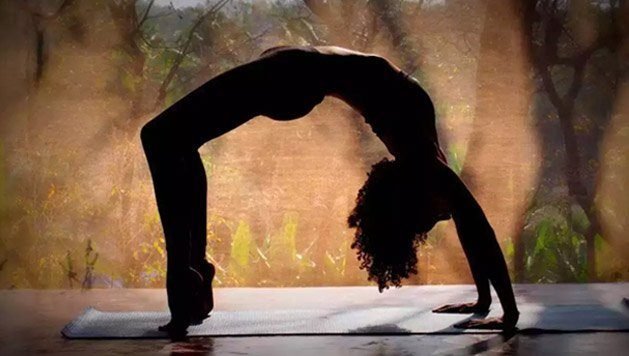
How to Choose a Yoga Practice That Is Right for You
There is no shortage of Yoga available today. Walk into almost any major city and you will find studios offering different styles, traditions and approaches to practice. The same is true when you travel. Yoga retreats have become increasingly popular, and places such as India, Goa and Rishikesh attract people from around the world who want to spend some time practising Yoga away from their usual routine.
This is a welcome development, but it can also create a small problem.
With so many choices available, a person who is new to Yoga can quite reasonably ask: Which Yoga is good for me?
The answer is not necessarily the style that is the most popular, the most physically demanding or the one with the most impressive photographs on social media. It depends on what you are actually looking for.
Before choosing a Yoga retreat or class, it is useful to ask yourself a few simple questions.
Are you mainly interested in physical exercise? Do you want to improve flexibility, strength and general wellbeing? Are you looking for stress reduction and relaxation? Perhaps you are interested in meditation, breathing practices or Yoga philosophy. Maybe you have already been practising asana for some time and now want to understand Yoga as a complete tradition.
There is nothing wrong with any of these intentions.
The important thing is to be honest about what you are looking for.
If your main interest is physical practice, you may naturally be drawn towards a style that places considerable emphasis on asana. If you are looking for a broader experience, you may prefer a traditional Yoga retreat where asana is studied alongside pranayama, meditation, Yoga Nidra, yogic kriyas, mantra, philosophy and other practices.
This distinction can make a considerable difference to your experience.
One of the most common misunderstandings about Yoga is that Yoga and asana are the same thing.
Asana is an important part of Yoga, but it is only one part of a much larger tradition. Classical Yoga includes practices concerned with the body, breath, senses, mind, behaviour, concentration, meditation and ultimately the nature of awareness itself.
Traditional Hatha Yoga also developed through a much broader understanding of practice than physical exercise alone. Asana and pranayama work with the body and breath, while practices such as Shatkarma, mudra, bandha, Yoga Nidra and meditation take the practitioner into subtler dimensions of practice.
This does not mean that everyone needs to practise everything.
It simply means that when choosing a Yoga retreat, it is worth finding out what the teachers actually mean when they use the word Yoga.
There are many recognised approaches to Yoga today, and each may place emphasis on different aspects of practice.
Some classes are primarily physical. Some emphasise a particular sequence of asana. Others place greater importance on alignment, breath, meditation or devotional practice. Traditional Hatha Yoga has its own methods and texts, while traditions such as Sivananda Yoga and the teachings associated with the Bihar School of Yoga have their own approaches to integrating different aspects of Yoga.
Rather than asking which style is objectively the best, a better question may be:
You may also discover that what you need changes with time.
A person may initially come to Yoga because of back stiffness or stress and later become interested in meditation. Someone else may begin with a strong physical practice and eventually become curious about Yoga philosophy. Another person may simply want to learn how to breathe better, relax and sleep more peacefully.
Yoga can meet people at many different points.
For someone considering a Yoga retreat in India, there is another question to consider: what kind of environment do you want to practise in?
India offers an enormous variety of Yoga experiences. Rishikesh has a long association with Yoga and spiritual traditions, while Goa offers a very different environment, with its tropical landscape, villages, beaches and relaxed atmosphere.
Goa has also developed into an important destination for Yoga retreats, meditation programmes and teacher training. There are modern studios, residential retreat centres, traditional Yoga spaces and programmes representing many different approaches.
The variety is wonderful, but it means that some research is necessary.
Do not choose a retreat simply because the photographs are beautiful. Look at the programme. Find out what is actually taught. Read about the teachers. Understand whether the retreat is primarily a fitness holiday, a relaxation programme, a traditional Yoga course, a meditation retreat or something else.
Most importantly, choose something that matches your intention.
If you are looking for traditional Yoga, look beyond the number of asana classes offered each day.
Ask whether pranayama is taught. Is there meditation? Is Yoga Nidra included? Are there yogic cleansing practices? Is there an opportunity to study Yoga philosophy? Is there time for silence and reflection? Does the programme introduce the traditional understanding of Yoga, or is Yoga being presented mainly as physical exercise?
At a residential Yoga centre, the way people live together can also become part of the experience.
Simple food, regular daily routines, time for practice, periods of quiet, Satsang, chanting or study can teach something that is difficult to learn from a ninety minute class alone.
This is one of the reasons residential Yoga retreats can be valuable. For a few days or weeks, Yoga is not something you simply fit into your schedule. It becomes part of the schedule.
There is another question that is perhaps more important than choosing a particular style.
What do you want Yoga to do for you when you return home?
Life will still be waiting. There will be work, relationships, responsibilities, difficult conversations, uncertainty and the occasional completely unreasonable person who appears to have been sent specifically to test your patience.
Yoga does not remove these things.
What it can do is change the way we meet them.
Through regular practice, we may become more aware of the body and breath, more observant of our thoughts and reactions, and gradually better able to pause before responding. The traditional teachings of Yoga offer many ways of examining our habits, attachments and expectations.
This is where Yoga becomes much more than exercise.
It becomes a practical way of understanding ourselves.
Another useful thing to remember is that Yoga is not a competition.
You do not need to be flexible. You do not need to stand on your head. You do not need to be young, athletic or particularly spiritual.
You simply need to begin where you are.
A good teacher should be able to work with beginners as well as experienced practitioners, while respecting the differences between individual bodies, abilities and levels of understanding.
The right Yoga practice should challenge you when appropriate, but it should also teach you how to listen.
Perhaps the answer is simpler than we think.
The best Yoga for you is the one that helps you move towards greater awareness, health, steadiness and understanding, while being appropriate for your present needs and circumstances.
If you want physical exercise, choose a practice that genuinely serves that purpose.
If you want relaxation, look for a programme that gives sufficient attention to breath, rest, meditation and Yoga Nidra.
If you want to explore traditional Yoga, look for a teacher or residential centre where Yoga is presented as a complete tradition rather than asana alone.
And if you are searching for something deeper, take the time to study. Read the tradition. Meet teachers. Practise. Ask questions. Do not be in too much of a hurry to decide what Yoga is supposed to be.
Eventually, the question “Which Yoga is good for me?” may begin to change into another question:
That is a much more interesting question.
Yoga is not something that belongs only inside a Yoga studio or retreat centre. It is a way of learning to live with greater awareness, harmony and purpose. Whether we discover that through Hatha Yoga, meditation, pranayama, Yoga philosophy or simply through learning to observe ourselves more carefully, the journey begins with the same thing: the willingness to look within.
Hari Om Tat Sat.
Article by Shivendra.
Copyright SWAN Yoga Retreat, Assagao, Goa, India.
 Practice
Becoming a Yoga teacher is much more than learning how to demonstrate asanas or completing a certificate. At its deepest level, it is an invitation to study Yoga, practise it…
Read article Practice
In a world of constant stimulation, information and activity, the ability to become quiet and attentive has become increasingly valuable. Meditation has consequently become a…
Read article Practice
If you are already practising Yoga and feel ready to understand the tradition more deeply, joining a Yoga Teacher Training Course can be a natural next step. A good Yoga…
Read articleEverything written here is taught in person, in sequence, at the ashram in Assagao.